Maßgeschneiderte Verpackungslösungen, nur für Sie




Discover 7 practical ways your business can help the environment in 2026, from sustainable packaging to eco-friendly operations and practices.
Maßgeschneiderte Verpackungslösungen, nur für Sie
For a long time, helping the environment was treated as a side topic in business. Important, yes, but often separate from the real conversations around operations, sourcing, packaging, cost pressure, and growth.
That no longer holds up.
In March 2026, the European Central Bank found that we are using natural resources 1.7 times faster than ecosystems can regenerate them, describing it as a structural deficit with nature. With natural resources under strain, environmental expectations rising, and regulation becoming more specific, especially in areas like packaging, it’s time for action.
It is becoming harder to treat environmental responsibility as something that sits mainly with individuals. Businesses have far more influence over environmental impact and, increasingly, more reason to act as regulation tightens, sustainability claims face greater scrutiny, and customers and partners expect clearer proof of action.
That’s why in this article, we are breaking down 7 practical ways your business can help the environment, with a focus on actions that are realistic, measurable, and relevant to day-to-day business operations.
There are a few reasons businesses are being pushed to take a more active role.
One is the scale of the challenge itself. According to UNEP, global resources use has more than tripled over the past 50 years, while the extraction and processing of resources account for more than 50% of global greenhouse gas emissions and more than 90% of biodiversity loss and water stress.
That means environmental pressure is closely tied to the way materials are sourced, products are made, packaging is designed, and waste is created across the value chain.
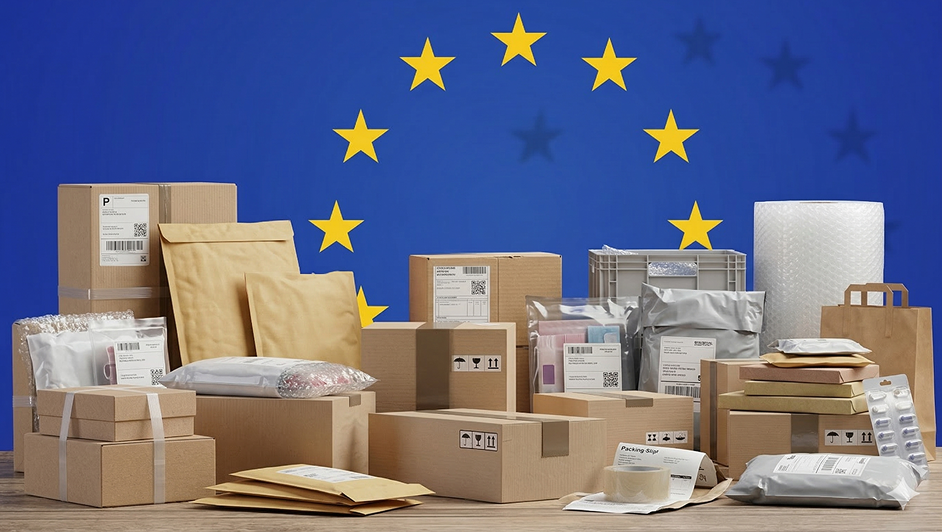
Another is regulation. In the EU, upcoming sustainability expectations are becoming more specific, especially in packaging. The Packaging and Packaging Waste Regulation (PPWR) entered into force on 11 February 2025 and has been generally applicable since 12 August 2026, pushing companies to pay closer attention to packaging waste, recyclability, reuse, and reduction.
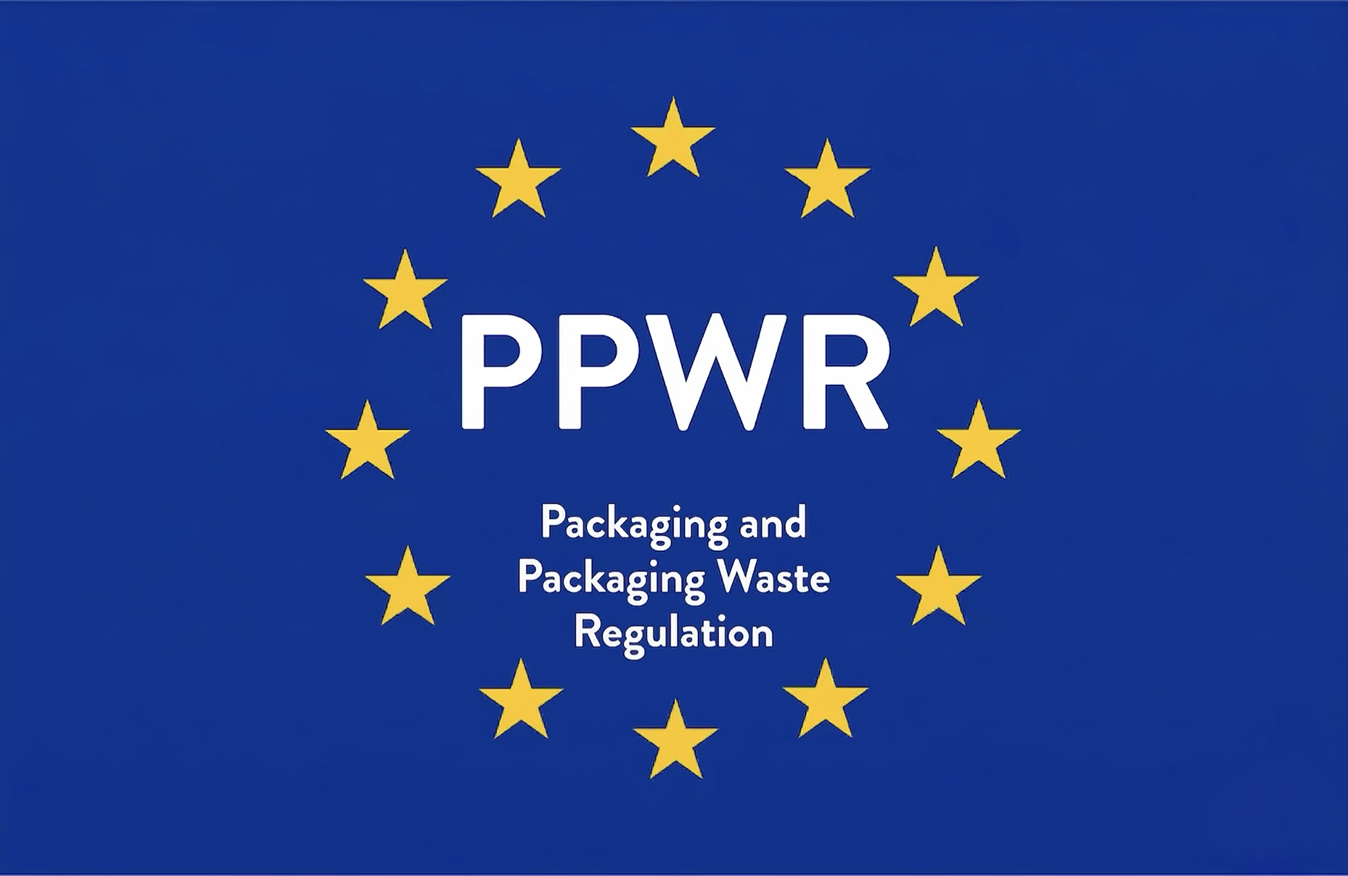
At the same time, companies in scope of the Corporate Sustainability Reporting Directive (CSRD) must report using the European Sustainability Reporting Standards (ESRS), raising expectations around how sustainability performance is documented and communicated.
Market expectations are also shifting, although not always simplistic. Not every customer chooses based on sustainability alone, but businesses are facing more scrutiny around the claims they make and the proof behind them.
That makes vague environmental messaging less convincing and operational action more important. PwC’s 2025 consumer research found that only 14% of shoppers in its study qualified as “eco-conscious,” which is a useful reminder that credibility matters more than broad green claims.

Businesses are being pushed to respond from multiple directions at once: resource constraints, regulation, reporting expectations, and a market that is increasingly asking for evidence instead of slogans.
Sustainable practices do more than reduce environmental impact. They can also help your business become more resilient, more credible, and better prepared for future pressure.
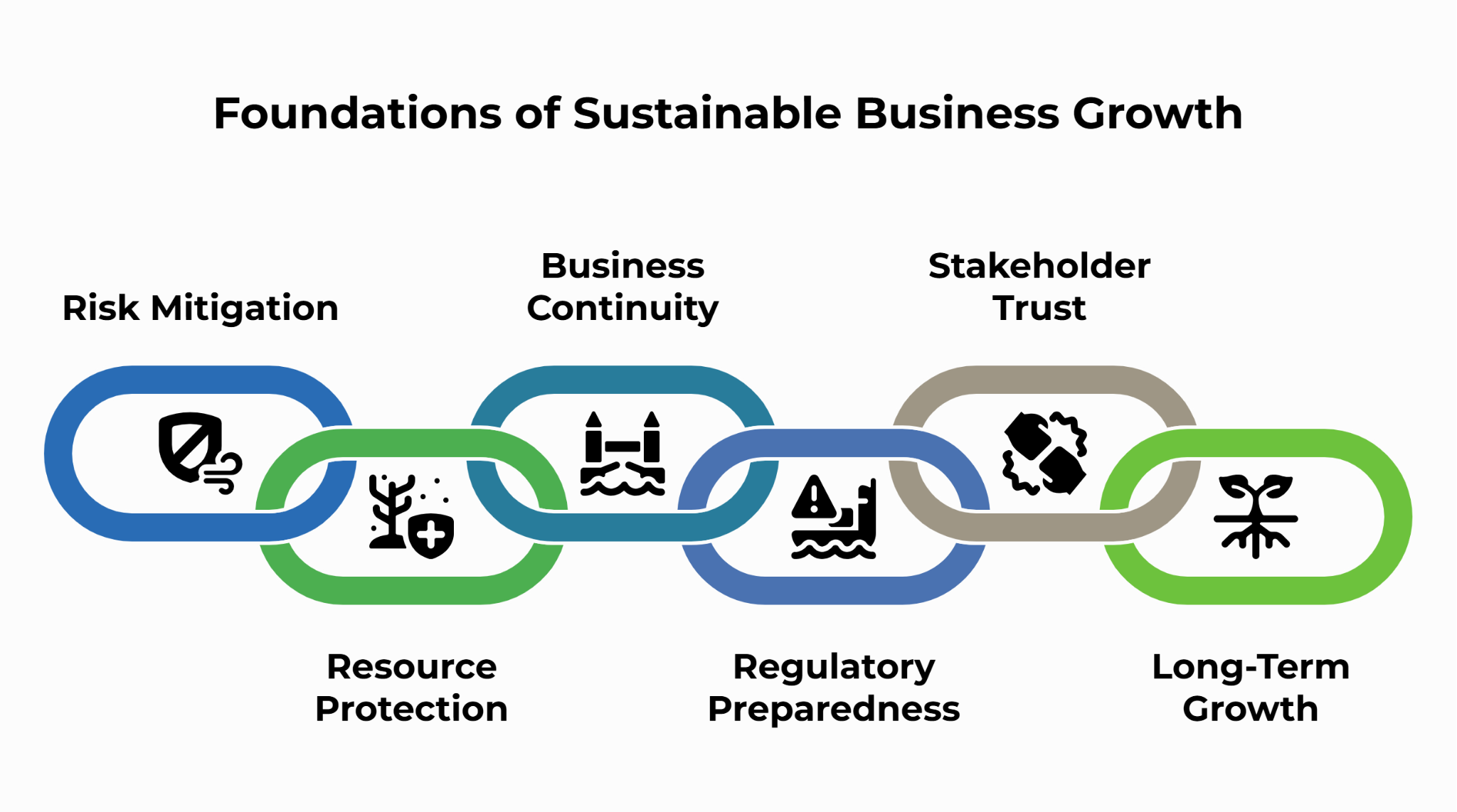
When sustainability is built into decision-making early, it becomes easier to respond to changing regulations, resource constraints, and stakeholder expectations without having to play catch-up later.
Some of the main long-term business benefits include:
Build long-term resilience through smarter packaging decisions
Explore packaging solutions that support your sustainability goals while helping you stay prepared for changing business and market expectations.
Once sustainability becomes a real business consideration, the next question is usually where to start.
Here’s what we’ve seen in our practice: you do not need to redesign every process at once to make meaningful progress. In most cases, the better approach is to focus on a few areas where changes are practical, visible, and easier to measure.
The seven actions below are realistic places to start. We’ve made sure each one focuses on improvements you can integrate into day-to-day operations while still keeping performance, compliance, and business reality in view.
For many businesses, packaging is one of the clearest places to start.
That is partly because packaging is so visible, but also because it affects several environmental issues at once: material use, waste generation, recyclability, transport efficiency, and regulatory readiness.
It is one of the few areas where you can often make a meaningful change without having to rethink the whole business. The scale alone makes packaging hard to ignore.

In 2023, the EU generated 79.7 million tonnes of packaging waste, an average equal to 177.8 kg per person. Paper and cardboard made up the largest share at 40.4%, while plastic accounted for 19.8% of the total.
That matters because conventional packaging does not all behave the same way at end of life. Materials such as PET, paper, glass, and aluminium often benefit from more established recycling systems, while other commonly used plastics, including PP, PS, and ABS, are still not consistently recovered across many markets.
Learn more about how businesses are reducing their plastic footprint
So if you are reviewing your packaging, it helps to look beyond whether a material is technically recyclable and ask a more practical question: how is this packaging likely to be handled after use in the markets where we sell?
Packaging is also becoming more important from a regulatory perspective. Under the EU’s Packaging and Packaging Waste Regulation (PPWR), the direction is clear: recycle, reuse, and redesign, including reducing unnecessary packaging and minimizing packaging weight where possible.
In practice, that can mean reducing packaging weight, removing unnecessary layers, improving recyclability, or redesigning the structure so it uses fewer resources without compromising product protection.
Depending on the application, it may also be worth exploring alternatives made from pulp like Pulp-Injection, fiber, or other lower-impact materials where they make sense from both an operational and environmental perspective.
That is what makes packaging such a practical place to start. It gives you a way to turn sustainability into something concrete through materials, design, and packaging efficiency.
Turn environmental goals into practical packaging decisions
Explore packaging solutions designed around material efficiency, recyclability, and formats that support real-world operational and regulatory requirements.
Energy use is one of the clearest ways your operations affect the environment. If packaging is one practical starting point, energy is another, especially in production, warehousing, heating and cooling, lighting, and equipment use.
In many cases, improving energy efficiency does not require a major operational overhaul. It starts with identifying where energy is being used unnecessarily and where systems are doing more work than they need to.
That can include:
This matters not only from an environmental perspective, but from an operational one too. The more dependent your business is on inefficient energy use, the more exposed you are to rising energy costs and supply volatility.
The more efficiently your systems run, the easier it becomes to reduce emissions in a way that is practical, measurable, and easier to maintain over time.
Your environmental impact does not stop at your own facilities. A large part of it often sits further up the value chain, in the materials you buy, the manufacturers you work with, and the processes they use to produce your products or packaging.
That is why responsible sourcing matters. If you want to reduce environmental impact in a meaningful way, it is not enough to look only at your own operations. You also need to look at how efficiently your suppliers manufacture, how transparent they are, and whether their processes support your wider sustainability goals.
This is especially important when it comes to Scope 3 emissions, which for many businesses make up the largest share of total emissions. If your suppliers are energy-intensive, wasteful, or unable to provide clear information about how they operate, that becomes part of your environmental footprint too.
Learn more about emission factors in our latest article
When reviewing suppliers and partners, it helps to look at:
For brand owners, this makes supplier selection more strategic. Choosing partners that can manufacture products and packaging more efficiently can help reduce environmental and reputational risk, while also making it easier to work toward lower emissions across the wider supply chain.
The stronger your suppliers are on efficiency, transparency, and responsible manufacturing, the easier it becomes to make progress beyond your own four walls.
Waste is often the result of decisions made much earlier in the process.
By the time something reaches disposal, choices around product design, packaging structure, material use, and overall complexity have already shaped how much waste is created. That is why waste reduction is not only about disposal. It is also about preventing waste upstream.
This is where circular practices can help. Instead of focusing only on what happens at end of life, they encourage you to look at reuse, recycling, recovery, and smarter use of materials across the full lifecycle.
In practice, that can include:
That redesign point is especially important. In many cases, businesses can reduce total waste by actively reworking products or packaging so they use fewer materials, fewer layers, or structures that are easier to handle after use.
This makes waste reduction part of design and development, not just something addressed once waste has already been created.
The less waste you build into the system from the start, the easier it becomes to reduce environmental impact in a practical and measurable way.
If you want to reduce environmental impact in a measurable way, your carbon footprint is one of the clearest places to look.

For most businesses, emissions are tied to everyday decisions around transportation, logistics, production, materials, and supplier activity. That means carbon reduction is usually less about one dramatic change and more about identifying where emissions are built into the way your business already operates.
A good starting point is to focus on reduction before compensation. In practice, that means looking first at where emissions can be avoided or reduced through better decisions, rather than relying too early on offsets.
That can include:
This matters not only from an environmental perspective, but from a planning one too. Lower emissions can support regulatory readiness, clearer target-setting, and more credible long-term sustainability efforts.
The more carbon-conscious your operations become, the easier it is to make progress in a way that is practical, trackable, and easier to defend over time.
Sustainability efforts are much harder to maintain if they sit only at strategy level.
In practice, many of the decisions that affect environmental impact happen day to day, through purchasing habits, packaging choices, equipment use, waste handling, travel decisions, and how processes are followed across teams. That is why employee understanding matters.
If people do not know what the business is trying to improve, why it matters, or what that looks like in their role, sustainability tends to stay too abstract to influence real behavior.
A stronger approach is to make sustainability part of how your teams work, not just something the business talks about. That can include:
This is what turns sustainability from a one-off initiative into something more durable.
The more clearly employees understand their role, the easier it becomes to make environmental progress part of everyday operations.
How you talk about sustainability matters almost as much as what you are doing.
Customers, partners, and other stakeholders are paying closer attention to environmental claims, and vague messaging is much less persuasive than it used to be. If the language is too broad or the proof is too thin, trust can disappear quickly.
That is why transparency matters. Clear communication and reporting helps show where real progress is happening, where limitations still exist, and what claims can genuinely be supported.
In practice, that can include:
This is one of the clearest ways to reduce greenwashing risk. It also helps separate genuine operational progress from sustainability messaging that sounds good but says very little.
See how we at Nissha communicate our environmental commitments in its annual sustainability report.
The more honest and specific your communication is, the easier it becomes to build trust around the work you are actually doing.
Start reducing environmental impact
Discover packaging solutions that help you cut excess material, improve recyclability, and align sustainability efforts with day-to-day business needs.
If sustainable packaging feels like a big shift, it helps to break it down into smaller decisions. In practice, the best starting point is usually not choosing a material straight away, but understanding what your packaging needs to do, where the current problems are, and which improvements are realistic for your product and market.
A practical way to start looks like this:
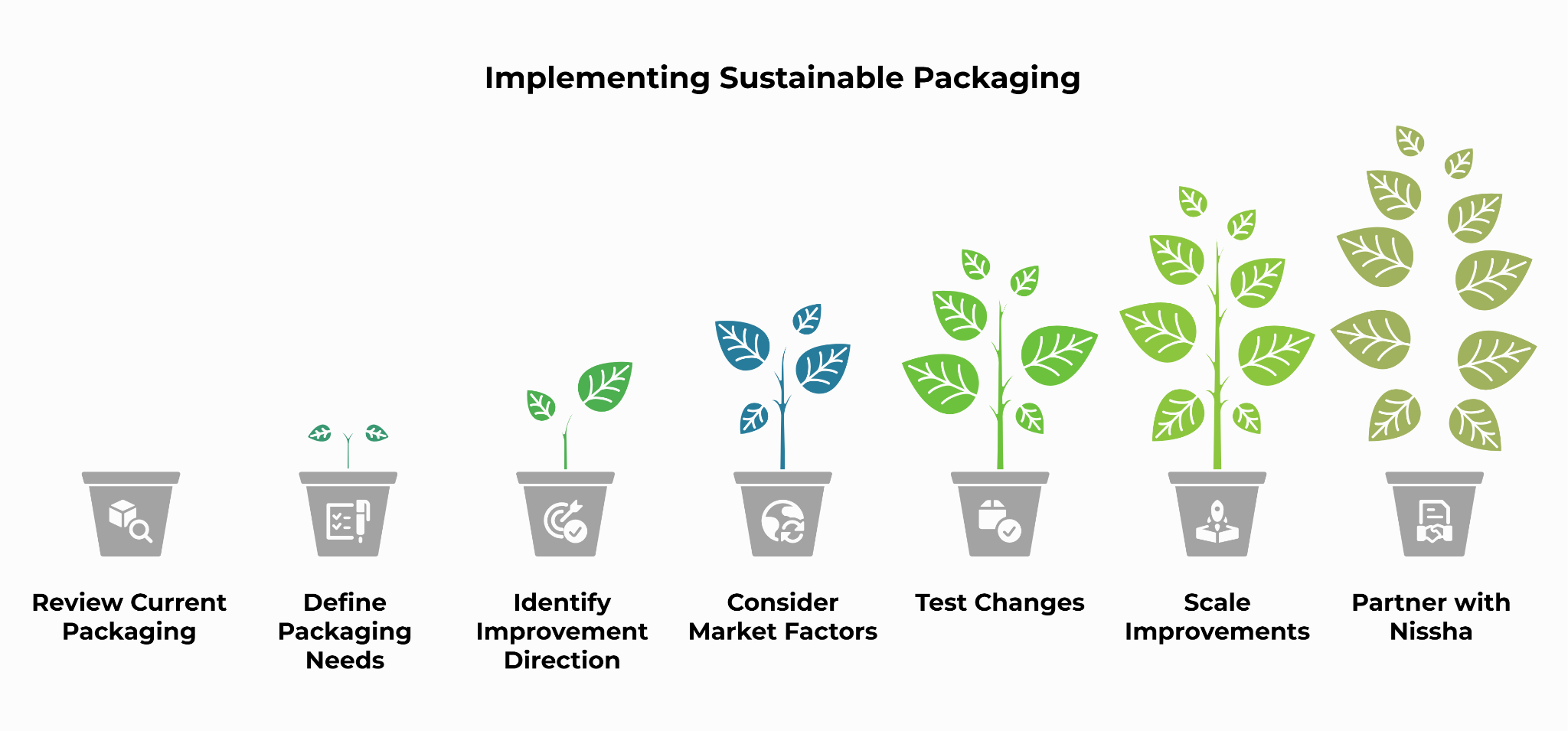
Look at where excess material, unnecessary layers, or hard-to-recycle components are being used. This helps you spot the parts of the packaging that may be creating avoidable waste or complexity.
Before making changes, get clear on the basics: product protection, shelf life, transport safety, storage efficiency, and brand presentation. Sustainability improvements need to work with these requirements, not against them.
That might mean reducing material use, switching to recyclable mono-material structures, increasing recycled content, or exploring compostable solutions where they are appropriate. The right option depends on the product, the packaging function, and the market.
A packaging format that looks sustainable on paper may not perform the same way in practice. Local recycling systems, waste infrastructure, and regulations all affect how packaging is handled after use.
Before rolling out changes widely, test them on a limited product range. This makes it easier to assess durability, logistics impact, customer experience, and overall waste reduction without creating unnecessary disruption.
Once performance, compliance, and operational fit are confirmed, you can start applying those improvements across more products or packaging lines.
A partner like Nissha can help you evaluate materials, structures, and packaging formats that support environmental goals while still meeting operational requirements.
Move from sustainability goals to packaging action
Find packaging options that reduce environmental impact while maintaining protection, efficiency, and regulatory compliance.
Sustainability is becoming a standard expectation for modern businesses, not just a nice extra. As regulatory pressure grows, resources come under more strain, and market expectations continue to shift, it is becoming harder to treat environmental impact as a side issue.
The good news is that meaningful progress does not require changing everything at once. Consistent, practical improvements across packaging, sourcing, operations, and communication can make a real difference over time.
Environmental responsibility and long-term business resilience are becoming more closely linked.
The sooner you start measuring, optimizing, and reducing, the greater the benefits for your business and the planet. Contact us today and let us be part of your journey toward a lower-carbon future.
An environmentally friendly business actively works to reduce its impact through better material choices, lower waste, more efficient energy use, responsible sourcing, and more transparent communication.
The key is to start with packaging performance requirements first, such as product protection, shelf life, transport safety, and usability. From there, businesses can look at reducing material use, simplifying structure, or switching to formats that are easier to recycle or recover.
Not always. A package may be technically recyclable but still perform poorly in practice if local recycling systems cannot process it effectively. Sustainable packaging usually requires a broader view that includes material use, weight, recyclability, reuse potential, and real end-of-life outcomes.
Scope 3 emissions matter because they often make up a large share of a company’s total footprint. They include emissions linked to suppliers, purchased materials, transport, and other parts of the value chain outside a company’s direct operations.
Often by starting with smaller design and packaging decisions. That can include removing unnecessary layers, reducing excess material, simplifying formats, or redesigning components that create avoidable waste.
The safest approach is to be specific, realistic, and evidence-based. Businesses should avoid broad claims they cannot support and instead explain clearly what they are changing, what the limits are, and what progress they can actually document.

Wir hier bei Nissha unterstützen Sie bei jedem Schritt!